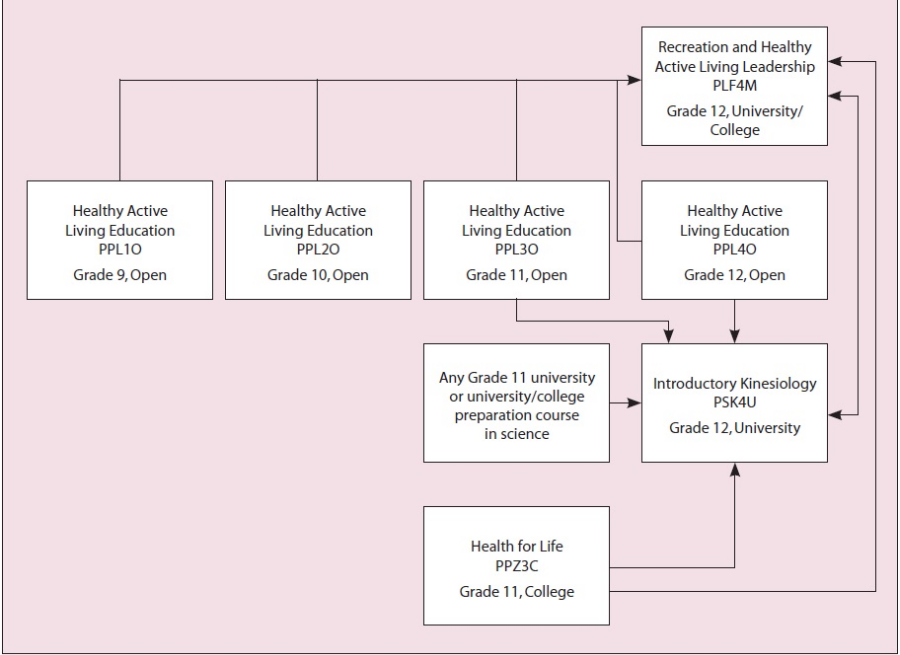
This course enables students to further develop the knowledge and skills they need to make healthy choices now and lead healthy, active lives in the future. Through participation in a wide range of physical activities and exposure to a broader range of activity settings, students enhance their movement competence, personal fitness and confidence.
Students also acquire an understanding of the factors and skills that contribute to healthy development and learn how their own well-being is affected by, and affects, the world around them. Students build their sense of self, learn to interact positively with others, and develop their ability to think critically and creatively.
This course enables students to further develop the knowledge and skills they need to make healthy choices now and lead healthy, active lives in the future. Through participation in a wide range of physical activities, students develop knowledge and skills related to movement competence and personal fitness that provide a foundation for active living. Students also acquire an understanding of the factors and skills that contribute to healthy development and learn how their own well-being is affected by, and affects, the world around them. Students build their sense of self, learn to interact positively with others, and develop their ability to think critically and creatively.
This course explores social, economic, and political developments and events and their impact on the lives of different individuals, groups, and communities, including First Nations, Métis, and Inuit individuals and communities, in Canada since 1914. Students will examine the role of conflict and cooperation in Canadian society, Canada’s evolving role within the global community, and the impact of various individuals, organizations, and events on identities, citizenship, and heritage in Canada. Students will develop an understanding of some of the political developments and government policies that have had a lasting impact on First Nations, Métis, and Inuit individuals and communities. They will develop their ability to apply the concepts of historical thinking and the historical inquiry process, including the interpretation and analysis of evidence, when investigating key issues and events in Canadian history since 1914.

 This course enables students to further develop knowledge and skills in
computer science. Students will use modular design principles to create
complex and fully documented programs, according to industry standards.
Student teams will manage a large software development project, from
planning through to project review. Students will also analyse
algorithms for effectiveness. They will investigate ethical issues in
computing and further explore environmental issues, emerging
technologies, areas of research in computer science, and careers in the
field.
This course enables students to further develop knowledge and skills in
computer science. Students will use modular design principles to create
complex and fully documented programs, according to industry standards.
Student teams will manage a large software development project, from
planning through to project review. Students will also analyse
algorithms for effectiveness. They will investigate ethical issues in
computing and further explore environmental issues, emerging
technologies, areas of research in computer science, and careers in the
field.
To participate fully in the society and workplace of the twenty-first century, today’s students will need to be able to use language skillfully and confidently. The Ontario curriculum recognizes the central importance of reading and writing skills in learning across the curriculum and in everyday life, and prepares students for the literary demands they will face in their post – secondary endeavors. To ensure that they have the essential competencies in reading and writing that they will need to succeed at school, at work, and in daily life, students in Ontario must demonstrate those skills as a requirement for graduation.
The Ontario Secondary School Literacy Course (OSSLC) is a full-credit Grade 12 course that is offered as a part of the English program to provide students with intensive support in achieving the required reading and writing competencies. The reading and writing competencies required by the Ontario Secondary School Literacy Test (OSSLT) form the instructional assessment core of the course.
This course introduces students to computer science. Students will
design software independently and as part of a team, using
industry-standard programming tools and applying the software
development life-cycle model. They will also write and use subprograms
within computer programs. Students will develop creative solutions for
various types of problems as their understanding of the computing
environment grows. They will also explore environmental and ergonomic
issues, emerging research in computer science, and global career trends
in computer-related fields.